The 2026 FinOps Anti-Pattern: Why Finance-Led Cloud Cost Management Fails Without Real-Time Engineering Telemetry
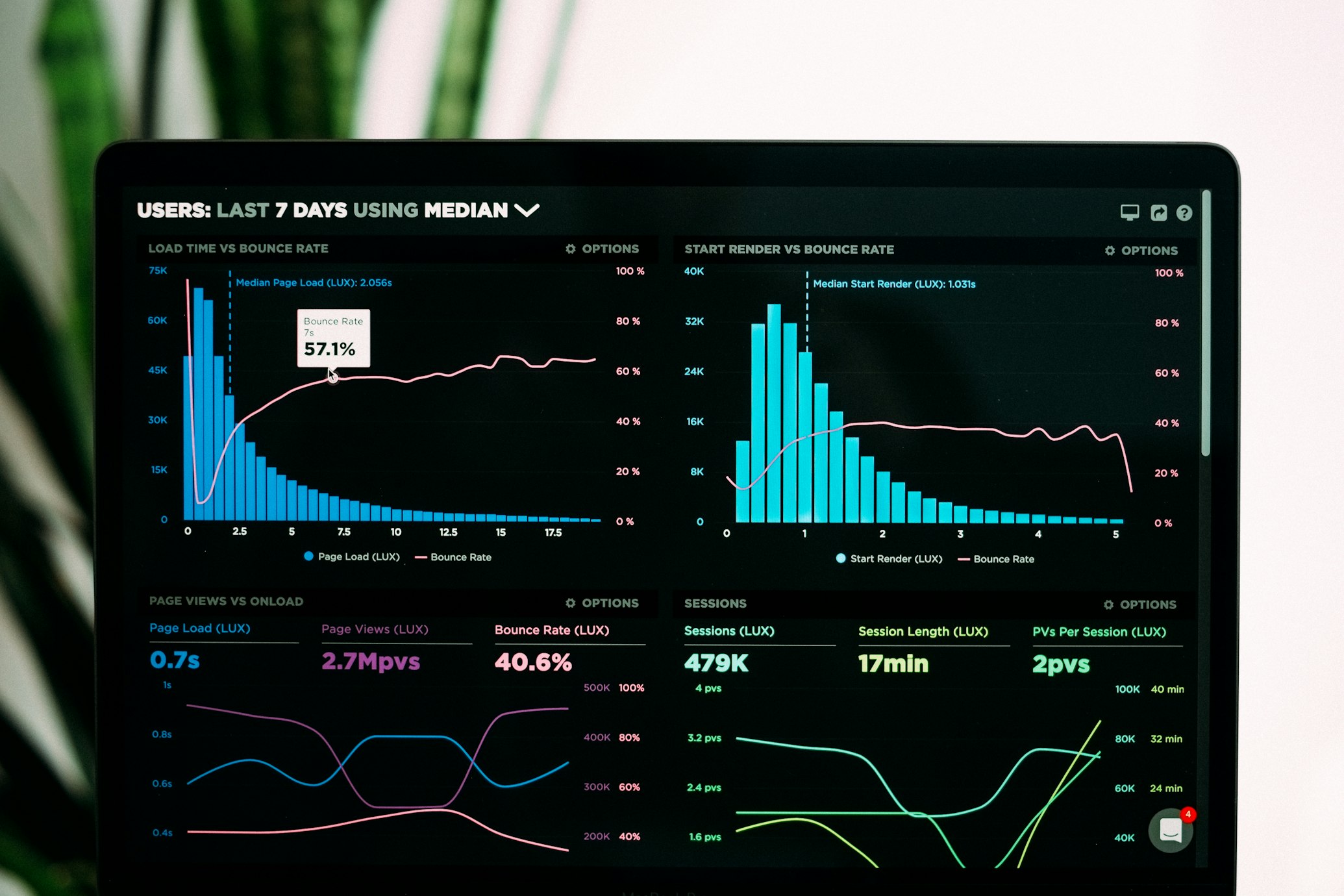
The 2026 FinOps Anti-Pattern: Why Finance-Led Cloud Cost Management Fails Without Real-Time Engineering Telemetry
By mid-2026, the global shift toward autonomous AI agents, high-density Kubernetes orchestration, and ephemeral GPU clusters has completely rewritten the rules of cloud infrastructure. Yet, many organizations are still managing their cloud spend using the same processes they employed a decade ago: relying on 30-day billing invoices, retrospective tagging audits, and FinOps teams driven entirely by Finance departments without direct engineering context.
This disconnect has spawned the defining FinOps anti-pattern of 2026: Finance-Led Cloud Cost Management disconnected from Real-Time Engineering Telemetry.
When Finance teams attempt to mandate cost reductions without understanding the underlying engineering workflows, they trigger a cascade of "Shadow IT," misaligned unit economics, and unmanaged waste—particularly "Zombie" Kubernetes resources and runaway AI token usage. The only way to survive the 2026 cloud cost crisis is to shift from batch-processed billing files to real-time, engineering-driven telemetry.
The "Finance-Owned" Anti-Pattern
A recurring theme across the industry in 2026 is that FinOps owned solely by Finance is destined to fail [1].
Finance departments naturally operate on monthly or quarterly cycles. When they receive a cloud invoice from AWS, Azure, or GCP, the data is already heavily aggregated and delayed by at least 24 to 48 hours—often up to 30 days. Armed with this stale data, Finance teams look for anomalies, aggregate the total spend, and then pass edicts down to engineering teams to "cut costs by 15%."
This creates massive friction. When Finance tries to make engineering decisions without technical context, several toxic behaviors emerge:
- Premature Throttling: Finance sees a spike in compute costs and demands a reduction, failing to realize that the spike perfectly correlates with a 300% surge in customer sign-ups. This is a failure to understand "Unit Economics"—mistaking healthy, revenue-generating scale for "waste" [1].
- The "Shadow IT" Rebound: Engineers, frustrated by arbitrary budget caps that break their deployments, begin spinning up un-tagged resources in shadow accounts or shifting workloads to unmonitored SaaS tools to bypass FinOps scrutiny.
- Alert Fatigue: When developers receive automated emails 72 hours after a test deployment complaining about a $50 overage, they quickly learn to ignore cost alerts entirely.
The 2026 "Hidden Waste" Epidemic
Because Finance-led FinOps relies on high-level billing exports rather than granular, real-time infrastructure data, "invisible leaks" are draining FinOps budgets worldwide. The two biggest culprits in 2026 are Kubernetes complexity and AI token waste.
Kubernetes "Zombie" Resources
Kubernetes remains a major source of billing surprises due to its ability to hide wasted space [2]. When a deployment scales down, it frequently leaves behind "orphaned" resources.
- Orphaned Load Balancers: A service is deleted, but the cloud provider's external load balancer remains active, charging an hourly rate indefinitely.
- Detached Storage Volumes: Stateful sets are destroyed, but the underlying Persistent Volume Claims (PVCs) fail to trigger the deletion of the actual EBS or Persistent Disk volumes.
- Underutilized Nodes: Engineers fail to set precise
requestsandlimits, leading the cluster autoscaler to spin up massive nodes that sit 85% empty because Kubernetes believes they are fully reserved.
Small idle instances ($50/month) or orphaned disks compound rapidly. Industry data suggests that 100 "zombie" instances can easily cost $60,000 per year [2]. Without real-time telemetry confirming that these resources are genuinely idle, Finance simply sees them as "compute spend" and assumes they are necessary.
AI Token Waste and the "Value Framework"
As AI platforms are integrated across enterprise workflows, a new category of unexpected costs has emerged: Token Waste [3]. In an era of LLMs and agentic AI, calling an API can cost fractions of a cent, but a recursive loop or an unoptimized prompt caching strategy can execute millions of calls overnight.
Determining who is generating value versus who is "wasting tokens" on inefficient prompts is impossible from a high-level AWS invoice. Moving away from simple "blocking" guardrails (which kill innovation) toward a value framework requires tracking the ROI of every model call in real-time [3].
The Shift to Unit Economics
The primary metric for 2026 is no longer the "total cloud bill." It is Cost per Business Unit (e.g., cost per transaction, cost per active customer, cost per API request) [1].
Unit economics requires merging two distinct data streams:
- Business Metrics: The number of users, transactions, or jobs processed (often pulled from application databases or Datadog/New Relic).
- Cost Metrics: The exact infrastructure cost required to serve those users.
A rising cloud bill is perfectly acceptable—even desirable—if the "cost per customer" is decreasing, indicating efficient economies of scale. If the total bill goes up by 20% but user growth is up 50%, the engineering architecture is performing brilliantly. A Finance-led FinOps model looking only at the total invoice would mistakenly flag this as a crisis.
The Solution: Real-Time Engineering Telemetry
Waiting for a monthly invoice is a legacy failure [2]. The only way to implement true unit economics and eliminate the FinOps anti-pattern is to give engineers real-time cost visibility directly in their operational workflows.
This is the foundation of Real-Time Cloud Cost Monitoring (RTCCM).
By ingesting raw infrastructure telemetry (CPU duty cycles, RAM utilization, network egress, GPU allocation) via OpenTelemetry and cross-referencing it instantly with public cloud pricing APIs, engineering teams achieve sub-60-second visibility into their exact burn rate.
How Real-Time Telemetry Changes the Game:
- Immediate Feedback Loops: An engineer deploys a new microservice. Within 60 seconds, a Grafana dashboard or Slack alert informs them that their new configuration is burning $40/hour more than the previous version. They roll it back instantly, preventing a 30-day billing shock.
- Zombie Interdiction: Automated agentic AI can scan the telemetry stream, identify an EBS volume with zero read/write IOPS for 48 hours, and immediately alert the specific developer who provisioned it.
- Engineering Accountability: Cost becomes a non-functional requirement tracked in CI/CD and production dashboards alongside latency, error rates, and uptime. Engineers are empowered to optimize their own code because they have the data to do so.
Conclusion
The 2026 cloud cost crisis cannot be solved by spreadsheets or quarterly budget reviews. FinOps must evolve from a Finance-led auditing function into an Engineering-led operational discipline.
By abandoning the 30-day billing delay and embracing real-time telemetry and unit economics, organizations can safely navigate the complexities of AI scaling and Kubernetes elasticity. They can stop punishing healthy growth and start targeting the real enemy: architectural inefficiency and hidden waste.
Ground Truth Bibliography
- [1] The Shift to Unit Economics & The Finance-Owned Anti-Pattern. costimizer.ai.
- [2] AI-Driven Anomaly Detection vs. 30-Day Invoices, Zombie resources. medium.com.
- [3] FinOps for AI and Token Waste. nordcloud.com.
Cletrics is the only platform that provides 1-minute real-time cloud cost visibility for AWS, Azure, and GCP. Empower your engineering teams and stop the Spend Avalanche today at realtimecost.com.
Ready to monitor real-time cloud cost?
Self-host Cletrics free under MIT, or use Cletrics Cloud (1% of monitored cloud spend, hosted) and let us run it for you.
See Cletrics Cloud Self-host (free)